Tag Archives: Editorial

So, now you’re a writer?

I’ve been published; I’ve received money, real money, for my work. Now, I’m truly a writer, right? Well, yes and no.

Having only been recently published, and receiving money for my work, I can say its one of the most interesting turning points in my life. In that, nothing turned. I have kept a journal for many years, and in that time have written many things. Shallow and deep things on many subjects that were important to me at the time, and in retrospect and after careful reading, the vast majority of them weren’t very good. I’ve always tried to create, while I’ve pined through different jobs that have paid me very decent money, but all the while I’ve wanted to make a living with my art. Either drawing, or painting or writing; I didn’t want to continue existing simply maintaining the bottom line of some corporation.

I don’t expect my writing or my art will ever produce enough money to sustain me, but just being able to create something for public consumption is all I was really aiming for. But that’s different than what I thought it was. In hindsight, it seems so obvious now; and some reading this may even find it silly: when you create for public consumption, other people will read it. They will judge you, and that’s good. The worst thing you can do as an artist is surround yourself with people who will not openly criticize, when invited. These people know you, they know how you act and how you speak, and they will put your voice behind everything you write. To them it sounds natural, because it’s you, in the context of you.

I don’t think that’s what makes a good writer. It’s not about knowing when to put the fancy words in, or show off your vocabulary skills. Writing is for the reader. You’re painting a picture, and letting the reader fill in with their imagination. If you are forcing your own language into your work, you’re essentially forcing the reader to receive it as you’ve imagine it; you’re not letting them play in their own imagination.

Growing up, I remember reading many books. I had significantly more time then, and I would spend hours reading and rereading through all sorts of genres, novelists, screenplays and comic books. Isaac Asimov, Anne Rice, Carlos Castenda, Michael Crichton and Neil Gaiman filled my head with new worlds that didn’t exist before they created them, and that power amazed me.
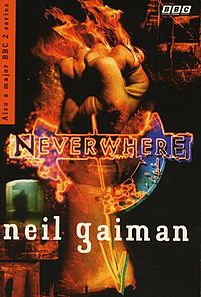
201px-NeverwhereI remember reading Neverwhere by Neil Gaiman, and having this perfect image in my head of what Door, and Richard may look orsound like, the battle of the Hunter and the Beast of London Below was so vivid in my mind, I was engulfed in this imagination so deeply, I could almost smell the underground. I heard there had been a BBC television adaptation, and I had to find it. This was long before downloading a film was optional. I eventually found a bootlegged version on eBay; and anxiously waited for it to be mailed through the post from the ether, because in those days, people just left, and things simply came. They weren’t tracked and available at an instant.

When I received this VHS with its hand written label, I couldn’t wait to watch. It was a spiritual moment; surely what I had envisioned was what they had filmed! What I read and saw in my head what the only way it could be!

It wasn’t, and I hated it. I kept it, and still have it. I’ve even purchased its reprinting when it was officially available in the states, because I loved the story so much, but I haven’t watched it since. My imagination ruined that film before I had even received that bootlegged version; when it was written, it was done in such a way, whatever Neil saw was not forced onto me. His words gave me a nudge into the direction he wanted the story to go, he gave me elements of the environments, without demanding my imagination see or do anything other than the storytelling.

I’m sure all of my writing for my own amusement forgot that lesson. They were only letters written to me. The few people that have read them already had a concept of my voice, and where I probably intended to go. But when writing for people on the other side of the country, or the world as a new writer does today; one simply can’t bully the reader. They will never hear it in the writer’s voice, and generally, they wouldn’t enjoy it if they did. Only writers lucky enough to have built a fan base, who are familiar with their own voice, will be able to succeed in such an environment.

Miles Davis once said “You have to sound like a lot of other people before you sound like yourself”, and that’s very true. But another element of that, at least in my writing, is: you have to let your reader sound like themselves. I want to be the writer that lets the readers experience their own imaginations, nudging them along, giving a fresh idea, or my own spin on how I saw it, without forcing my own voice. In that, I will have found how to sound like myself.
Why do you have the right to be happy?

Happiness

Having worked many different style jobs, and gathered at least a fair share of life experiences, I have come to one simple understanding.  Anyone who tells you that you deserve to be happy, or have a right to happiness, is a liar.

Expectations of happiness and entitlement.

That does not mean abandon all hope.  Everyone should have a general expectation of cordiality in a civilized society; from my experience however, once the average person feels that they have been, in some way infringed upon, either by chance, happenstance, or even their own doing; their sensitive ego’s become so cornered in their entitlement of happiness, or satisfaction that they thrash out, immediately causing a domino of negative karmatic influence for every other person they encounter.

happy

Ultimately, you are responsible for your own happiness.  But those small doses of happiness: that piece of cake, cigarette, or fuck.  Why do you think you deserve it?  Under what pretention do you feel you warrant another treat?  Our lives are addiction, and addiction will never get what it wants.

So what causes the problems; the mean, nasty people that spread like a dark cancer over our lives and impede upon our happiness?  They’re people like you, and me, they just believe it more.  They believe everything they want is more important, and they are willing to sacrifice you for it.  So, congratulations, they’ve sacrificed you for what they feel they needed.  Sadly, in general; your sacrifice was in vain, because it didn’t get them what they actually wanted.  Someone else to think they are as important as they do.

So how do we fix it?  It’s actually very simple.  Accept, unconditionally that maybe, in the end, you don’t deserve to be happy.  It’s Ok, and it’s perfectly fine to not be Ok.

Everyone else has his or her own problems to go through throughout the course of the day and just because you have to live with yourself through all of it, there’s no reason that the person you encounter for a moment of it should have to put up with it.  Short of that, don’t treat anyone like anything; stop exercising your almighty introverted id upon every human you encounter.  Just because you have to hear your own addictions for comfort, nagging at the back of your mind like a child denied candy, doesn’t mean everyone else needs to experience it as well. What have you done today that makes you so deserving?  We are not entitled to anything, and your success need not be at the sacrifice of those around you.

Les Misérables

Les Misérables

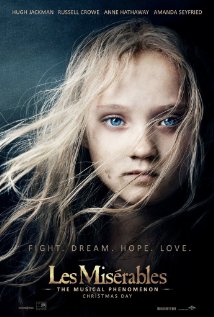
lesmisFour Golden Globe nominations, eleven Critics Choice awards, four Screen Actor’s guild nominations, and the NationalBoard of Review winner for best ensemble cast (to name a few).  An accolade list with this much praise would imply a movie that may have completed its theatrical run, and be headed to DVD.  However, in this case, as of this writing, the film is not yet released.  This film is Les Misé

In our time, movies are created and destroyed in the minds of critics.  Their reviews, before the movie has even hit the public eye, create a prepackaged buzz that can guarantee a film’s success weeks or even months before its first ticket is sold.  In this particular case, winning awards before the general public has even viewed the introduction, the Victor Hugo novel turned musical turned Christmas event of 2012 seemingly has its position secured.

For those uninitiated; the story told a thousand times over: spanning from 1813 to the French June Rebellion of 1832, on its surface tells the story of Jean Valjean, a French convict released from the prison system after 19 years for a string of infractions rebuilds his life; and in doing so, we see a myriad of subplots surrounding the heart of Les Misérables.  The film focuses solely on Valjean, and his pursuit by police inspector Javert, played by Russell Crowe.  True to the original, the surrounding stories of commoner Fantine [Anne Hathaway], Cosette [Amanda Seyfried], Marius [Eddie Redmayne], and Éponine [Samantha Barks] are not left out.  Repopulating Hugo’s original masterpiece.

Possibly the most interesting bit of this film, is a brave new approach to the on-screen musical.  Past stage musicals turned film, such as Moulin Rouge or more recently Sweeny Todd, were created by bringing a cast into a studio.  Their vocals were recorded, machined and produced to create a pitch perfect, tempo regulated experience of the original works.  However, with Les Mis; the vocal tracks are recorded with the film.  Each actor can control their own tempo, and speed.  The sounds of their actions remain true with the vocalizations during the movie; giving a more realistic, to-the-moment response and reaction more often experienced in a stage performance.  Only after the final performance is recorded, is the finished film produced with a full orchestral composition. The actors are given the freedom to act- change their emotional response based upon their situation, and not have to assume or judge months before they’re in costume, or sometimes before having even met, with their costars.

As so much is homogenized and sterilized in the creative works of our society, it is refreshing to be able to experience media without having a team of experts take out every bit of the human element that made it in the first place.  While there is certainly a time and a place for the computer perfected aural performance, the decrepitude and absolution of revolutionary era France, surrounded by the squalor of poverty and hunger; a perfectly packaged scene seems almost disingenuous.  As carefully crafted characters pour their hearts upon the stage, without the emotion- the audience could easily be lost of the distraction of perfection.   Ultimately reminiscent of period films of the early 1990’s, trying desperately to convince the audience of a filthy vagrant, with perfectly white teeth, plump with craft services; or warriors, fresh from battle, in machine hemmed blues and gold.  The performance is accepted, but ultimately safe, and not imbued with the gravity it deserves.

Les Misérables was screened on November 23rd, 2012; and closed with standing ovations.  Originally slated for a December 14th public release, postponed to Christmas Day due to the conflicting release of blockbuster film, The Hobbit.

Budgeted at $61 million, with a total running time of 2:40.  Les Misérables hit US theaters Christmas Day, 2012.

Cloud Atlas

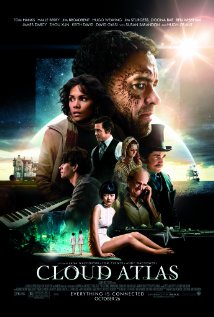
CA1“Our lives are not our own. From womb to tomb, we are bound to others, past and present; and by each crime and every kindness, we birth our future.”  This is the tag line seen on ambiguous commercials and adverts for Cloud Atlas.  It doesn’t seem to tell you much about the general feel or message of the film.  After the first viewing it becomes clear, there is no more succinct way to describe what this film is trying to say.

At its core, Cloud Atlas is six separate story lines, concurrently interwoven to convey the same message.  While it may sound convoluted or difficult to follow, in execution it stays clear throughout.  This is achieved by the stark contrast of the visual styles utilized by the Wachowskis (The Matrix series, Speed Racer) and Tom Tyker (Run Lola Run, The International) directing each piece independently.  Each section is so visually different, the audience is immediately aware of the shift.  From a voyage in the Pacific in 1849, to a post-apocalyptic Hawaiian island, each shift is like watching a separate film entirely.  Muted browns, and creams in 1973 San Francisco jump to vibrant blue’s and sun-swept reds of the South Pacific seas in the 1800’s, that may then open the door to deep technical blacks and greys of Korea, 2144.

That is not to say this film is all art and story.  At just under three hours, total running time, the filmmakers certainly are asking for an investment from the viewer; but that amount of time is completely necessary to not only weave such a movie together, but also let you watch how it is built.  Like a magician doing a card trick for you, slowly; showing you every move of the cards without knowing the prestige at the finale.

An ensemble cast compliments the intricate story telling.  Tom Hanks, Halle Berry, Susan Sarandon, Hugo Weaving, and Hugh Grant are among the credits; each playing several different roles throughout, breaking through race and gender roles.
CA2The same cast is utilized in each story, but they are not the same lineage in each time line.  Villain, hero, love interest, antihero, misanthrope- while intentions may seem apparent at the onset, most often they don’t play out as expected.  This is not a story of reincarnation.  This isn’t a story of fixing the wrongs a person may have committed in their lifetime.  This is not karma, justice, man versus man, or man verses environment, but it is a flowing stream of consciousness of how each person may experience the effects of every time before; and ultimately, something bigger than themselves.

It would be overly simplistic to say the movie begins as many tales: with a very old man, scarred and tattooed, resting by firelight; introducing a tale in the darkness.  Immediately we are introduced to our timelines, each one visited only long enough to get comfortable; then seamlessly transitioned into the next storyline.
CA3Chatham Islands, South Pacific seas, 1849; an American is conducting business, when he is confronted by the violent whipping of a Moriori slave.  Cambridge, England, 1936; a young musician is on a quest to compose his masterpiece (the eponymous Cloud Atlas Sextet).  San Francisco, CA, 1973; a reporter gets a unique lead on global conspiracy.  United Kingdom, 2012; a publisher falls under an extreme set of circumstances brought on by a client.  Neo Seoul, Korea, 2144; a clone is giving a final interview after the tumultuous conditions that lead her to trial.  Lastly, a post-apocalyptic Hawaiian Islands (revealed in the credits as 2321), the remnants of human civilization learn the conditions that lie at the core of their beliefs.

None of the stories told seem to have any relevance to one another; and therein rests the wonder of the original storyteller’s vision.

Cloud Atlas has currently finished its theatrical run, is available from the right sources now, but will ultimately be released on Blu-Ray, Ultraviolet digital download, and DVD on February 5th,.